Even the best bike rack will be awkward or insecure if it is installed incorrectly. Installation determines whether the rack is stable, whether thieves can carry it away and whether bikes are easy to park. In this article – the main installation methods and practical tips.
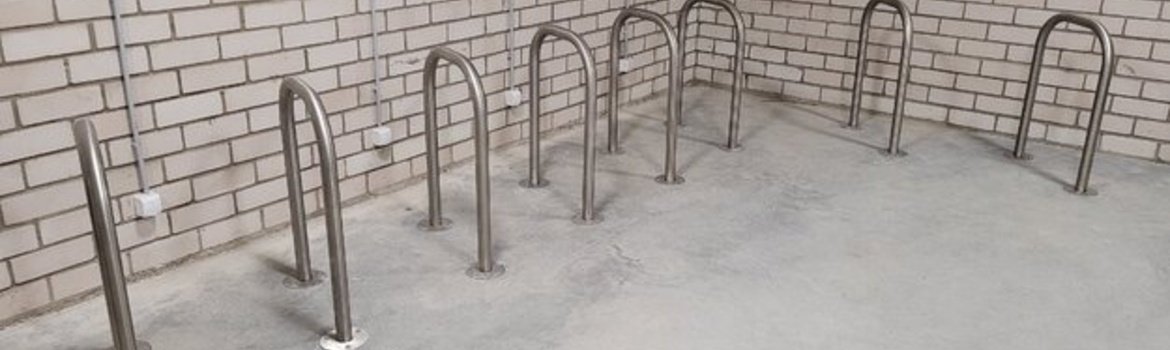
The most common method. The rack's legs or base plates are bolted to the surface with anchor bolts. Suitable for concrete, paving and other solid surfaces. Anchor bolts are supplied with most of our racks. Another advantage of this method is that the rack can be moved if needed.
The rack's legs are sunk into the ground and covered with concrete. This is the sturdiest and most secure method, especially in public places. For example, the Tubo rack is set in concrete at a depth of 400 mm. Many racks are made in both a bolt-down and a set-in-concrete version.
Wall-mounted holders are fixed to a solid wall with anchor bolts. Before drilling, make sure there are no electrical cables or pipes in the wall. If there is no solid wall, choose a freestanding structure such as the Lift Premium hanging frame.
Outdoor racks can be installed on:
Most importantly, the base must be stable and level.
When space is limited, you can choose racks where bikes are parked at an angle, such as the rotating rack RAD5 or the rack angled at 45 degrees. Read more in the article How much space do bike racks need?
It is recommended to choose locations that are:
A firmly fixed rack is much more secure and harder to remove. In public places it is better to choose racks set in concrete or anchor bolts that cannot be undone with ordinary tools. It is also important that the rack lets you lock the bike frame, not just the wheel.
One or two racks are easy to install yourself. However, when setting up a larger bike parking area, setting racks in concrete or fixing them to paving, it is worth leaving the job to professionals. We provide bike rack installation services throughout Lithuania – you can order installation together with the racks.
Correctly installed bike racks ensure security, convenience and durability. Choose the installation method according to the surface, leave enough space between bikes and install the racks in a clearly visible, well-lit location.
Anchor bolts are most convenient on concrete or paving, and the rack can be moved if needed. Setting in concrete is the sturdiest method and is essential if the rack stands on soil or grass.
Anchor bolts are supplied with most of our racks. Exact information is given in each product description.
Between bikes – 70–80 cm, between rows of racks – about 150–200 cm, and for a walkway – at least 120 cm.
Yes, we provide installation services throughout Lithuania.


 Business Excellence Award 2026